A 12V Series Mode Solar Charging
Regulator For A 12V Lead Acid Battery
If you're enjoying these pages and you
have an interest in hobby type electronics or repair jobs, you
might like to visit my other website www.usefulcomponents.com,
where there are details of some useful components for sale, and
some good electronics kits.
Introduction
The Series Solar 12V Battery Charger
Regulator In Use
Click to enlarge any image.
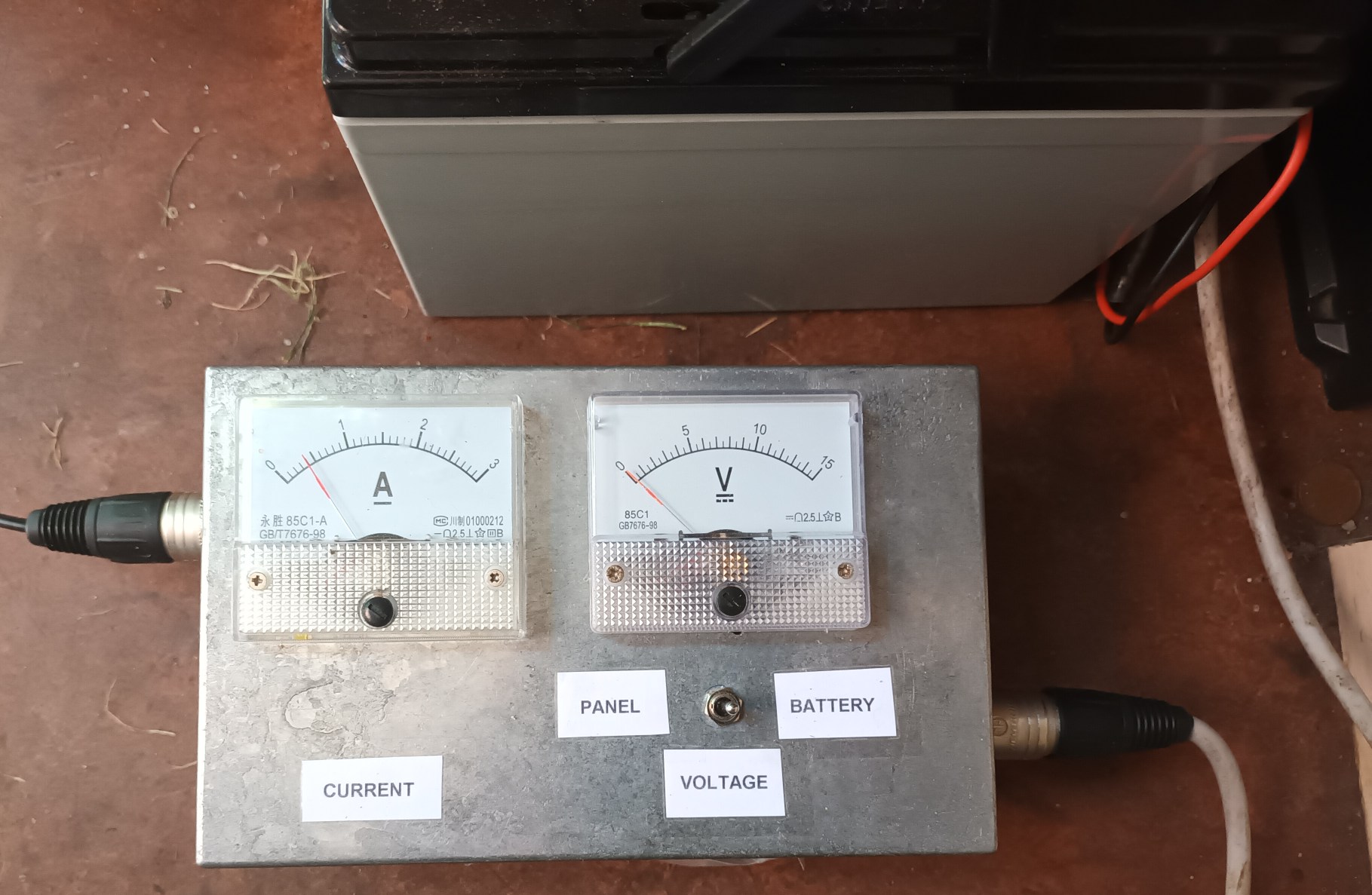
Back in the heady days of September 2021, in the UK we were out of
strict COVID restrictions, toddling along OK, and I decided to
venture North and stay with a good chum at a small country cabin
belonging to my brother. This is equivalent to posh camping. It's
very nice, has everything that you need, and even a small old 12V
car battery which was charge maintained by being connected to a 1
Watt solar panel hung in the window, with additional occasional
charges on the bench at home. Here's what one of those small
panels looks like.
Picture Of The 1 Watt "Battery Saver"
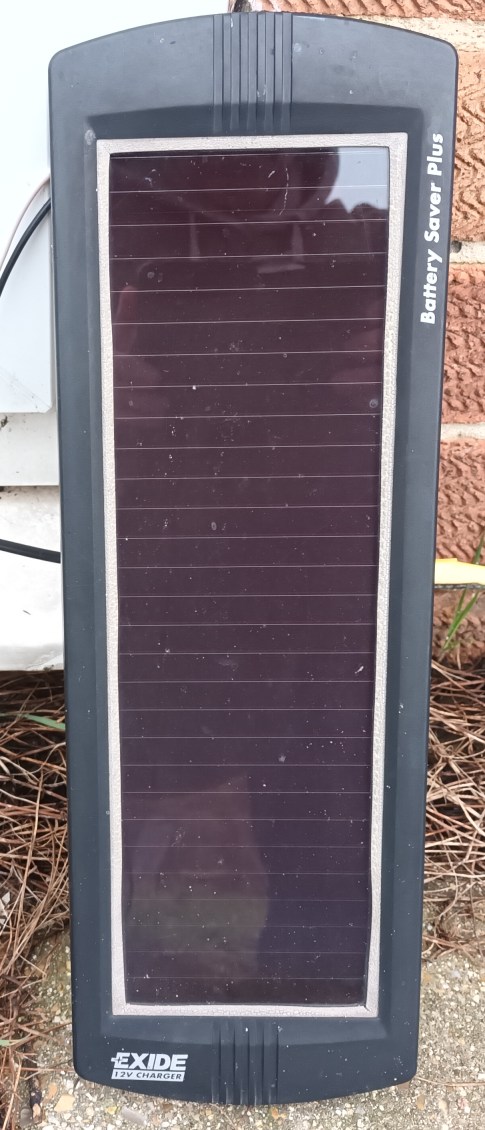
Henry's Solar Panel Top Tip
Can you see the horizontal cell
divisions on this amorphous silicon solar panel? If you somehow
cover up half of this panel vertically, you'll still get some
output. If you cover up just one of the individual cells
horizontally, you'll get nothing. That dark cell will block the
entire output. This is relevant if you're hanging such a panel in
a cabin window on a piece of string. The string has to be the
right length to allow all of the panel to be exposed.
These are better than nothing. If your car is sat on the drive for
two weeks at a time, or if you just want to run some small LED
cabin lights from an old battery, and you can get some days when
it is in full sunlight, no problem. I've seen 40mA coming out of
these while charging a 12V battery in full sunlight in the UK.
That might be 80mA in the Sahara at mid-day. They are advertised
as 1 Watt. So as P=VI, 1/12 = 0.083 Amps. You can put 40mA into a
sealed lead acid car battery for 8 hours a day all year and be
sure of never over charging. However, as I was staying for free, I
thought that I could make something that was a bit better. If you
want to charge your mobile telephone or laptop, you're going to
need a solar panel system that provides more current. That also
means that you have to avoid over charging that old car battery.
If you have a very nice caravan storage battery, the same thing
applies.
Lead acid battery charging is fascinating. For that, you can
search online for "Battery University," or anyone who is likely to
sell you a caravan storage battery.
A key requirement with any battery is that you don't short it out.
Automotive car starting batteries or caravan storage batteries can
produce an enormous current. Short out a car battery at the end of
some wiring and those wires will instantly glow orange-hot, ignite
the PVC insulation and set fire to the whole place. Installations
left unattended need to pay particular attention to this threat.
Big Brother was particularly keen to emphasise this issue, as well
he should. I set about to make something with sufficient built-in
safety that could get more solar charge into any given 12V
battery, given an old Craplins "12 Watt" 12V amorphous solar panel
that I'd bought 12 years earlier. There's no point having it
sitting in the dark underneath the stairs, eh?
If you have a boat, you might have one of those small wind
turbines or solar panels. In that case, what you normally do is
connect all the panels or turbine directly to the battery, but
also have a shunt regulator connected to the battery. The shunt
regulator dissipates the unwanted power as heat when the maximum
battery voltage is reached. This is done for maximum efficiency
between the source and the battery. The shunt regulators can get
rather warm dissipating the excess power. Here we are not looking
for maximum efficiency. What we want this time is to compromise
some small amount of efficiency for a regulator powered by a
medium to small small solar panel that you are happy to leave
alone for years charging a 12 Volt sealed lead acid battery. You
can use a semi-sealed low maintenance lead acid if you want, or
even an open cell type.
Battery University mentioned above will tell you that there is a
temperature coefficient involved in the cell voltage for lead acid
batteries. Ideally might want to track that when charging. 13.80V
is the standard float charge for six lead acid cells at 25ºC.
Float charge voltage is the voltage where you can sit at for a
long time without damaging a sealed battery. The temperature
coefficient is -1.8mV/ºC for each cell. It's not a tremendous
amount. Adding temperature compensation would be a nice bit of
finessing, but I've not included it in this project. If you're
going for the ultimate solution, there are ways to do it, but it
gets awkward if you want to measure the actual temperature of the
battery. You won't see temperature compensation on any but the
most fancy systems, certainly not a lead acid car battery bench
charger or a shunt regulator. Submarines, yes, but then the modern
ones have air bubble blowers for agitating the acid as well, and
then we're getting silly. You don't need it.
13.8V
Solar Series Regulator For Charging 12V Lead Acid Batteries
Schematic solar_series01-01.sch PDF
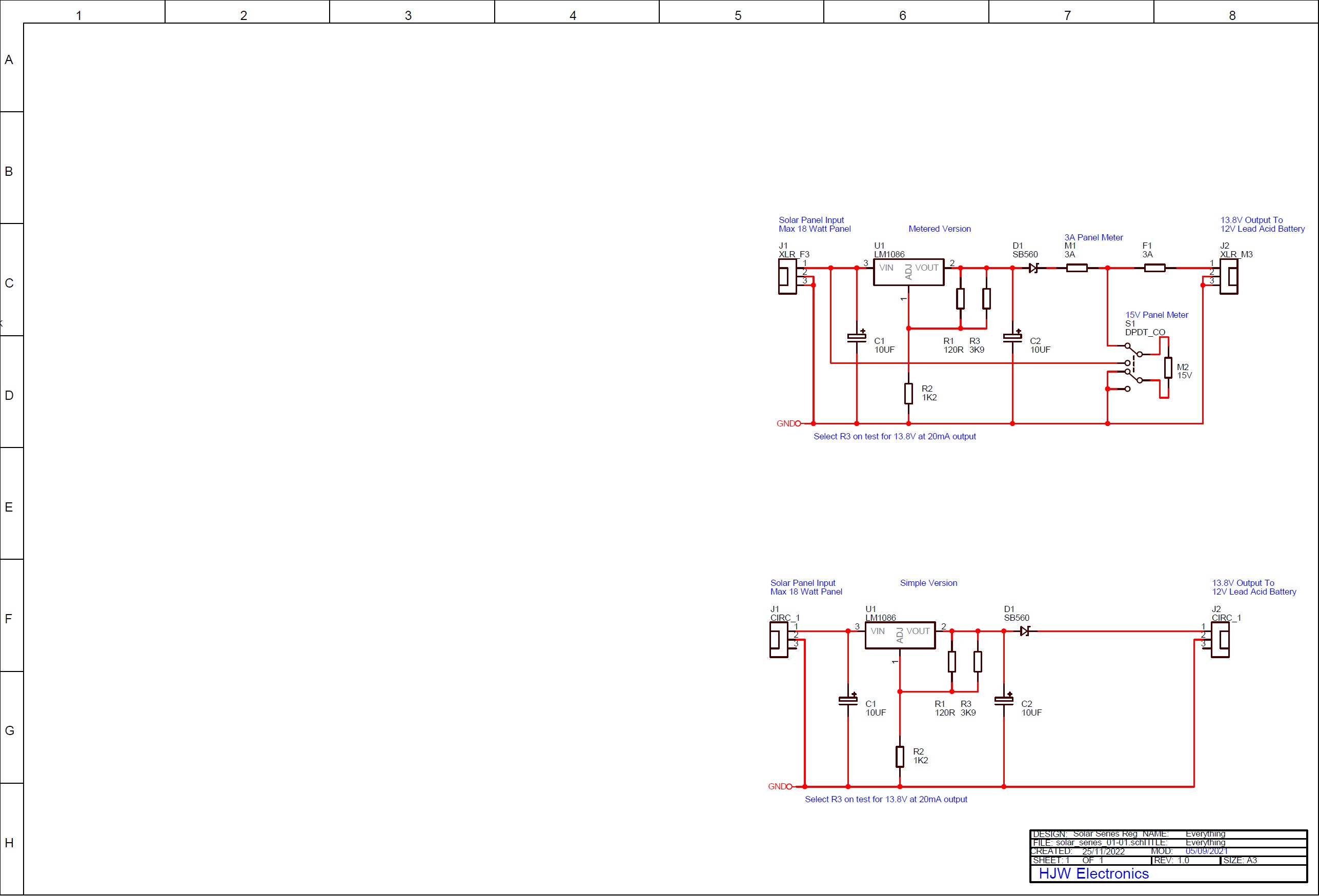
Input from the 12V solar panel comes in on a female XLR socket on
the left. There's no great need for any fusing or protection here.
Shorting out an 18 Watt solar panel isn't going to do any harm to
anyone. A "12V" solar panel usually refers to one which is capable
of charging a 12V lead acid battery at the rated panel wattage
when connected up directly, so the open circuit voltage can be
about 18V. This connects into an LM1086 low-dropout regulator. C1
and C2 provide high frequency stabilization for the regulator. The
regulator is set up by R1, R2, and R3 to produce about 14.3V at
the pin 2 output. A hefty low voltage drop power Schottky diode D1
follows, then a 3 Amp panel meter. The 2 Amp fuse is the
last thing before the male XLR output connector to ensure that any
failures internal to the unit will not cause a short circuit on
the battery. A centre-off DPDT switch allows a 15V panel meter to
be temporarily switched between the input and output voltages. The
centre-off switch is a biassed type that springs back into the
middle "off" position when released. In this way it ensures that
you can never leave the voltmeter connected.
How do you set the voltage on the regulator? We're looking to
float charge a lead acid battery at exactly 13.8V at 25 Centigrade
temperature. We'll call it 13.8V and ignore the temperature
coefficient. You could remove D1 and set up the resistors so that
U1 would produce exactly 13.8V, and all would be fine.
Unfortunately, in the dark, the battery would be discharging via
the resistor network and the regulator. D1 is a reverse discharge
blocking diode that stops this. But D1 has a forward voltage drop
of about 0.5V at 1 Amp, and it varies with the current. What are
we to do?
A car battery of any sort will take a certain amount of charge
current and not be damaged, no matter how fully charged it is.
Let's say 50mA. 50mA is quite low. So you apply 16V input to this
charger box and measure the output current, and adjust the applied
load to 13.8V. (Or wait until the battery connected reaches
13.8V) You then select-on-test R3 so that you see less than
the arbitrary 50mA current that you first thought of. In practice,
it's not as critical as all that. In full sun, U1 pin 2 ends up at
about 14.3V, the battery voltage climbs up towards 13.8V, the
current reduces and by that time the Vf of D1 is higher than 0.5V
anyway, and you'll never over charge your battery. For once, the
gods of silicon and resistance are helping us. You just choose an
appropriate compromise depending on the size of the battery
involved. The values shown are pretty good for a wide range of
possibilities.
You can use a preset variable resistor for R3 if you like, but I
hate presets. The wipers go open-circuit and they offer too many
options for fiddling by yourself or by others. Make your mind up,
test, and fit a fixed resistor. You'll never regret it.
The regulator is bolted to the substantial diecast aluminium case.
This provides more than enough heat dissipation even when charging
a discharged battery in full sunlight. The mounting tab is not the
ground pin, so this regulator requires a mica washer, an
insulating washer, and the usual horrible white heatsink grease. A
nice feature of the series regulator is that the device only gets
warm when you're charging. That will usually be the case when
you're in attendance to keep and eye on things. This is in
contrast to shunt regulators. They get hot when input power is
available and the battery is full. That will typically be when
you're not there using power.
The output lead connecting to the battery has a 2 Amp fuse really
close to the positive connecting clip. This ensures maximum
protection against possible short circuits in that lead. The
regulator box itself already has another 2 Amp fuse, and could be
considered to be redundant. It does however provide secondary
protection against someone shorting out the external fuse with
tin-foil, which idiots will occasionally do. Use the modern
automotive spade terminal type of in-line fuseholder. The old
tubular fuseholders with the internal springs going over the
connection wires make terrible connections.
The voltage regulator chip has on board over current protection
which kicks in at about 1.5 Amps. This protects against being
connected to an over sized solar panel. The regulator chip also
has thermal cut out protection. This protects against the unlikely
chance of it getting too hot which could occur if, for instance,
the bolt holding it onto the case became loose. In the picture at
the top of the page you can see the unit in use charging at about
400mA. Having the meters available is not strictly necessary.
Moving coil types are not particularly accurate. They are still
very handy for seeing that everything is working. It's very
gratifying when the sun is shining and you see half an Amp going
in at 13 Volts.
Pictures Of The 13.8V Solar Lead
Acid Battery Charging Regulator Under Construction
Internal Metalwork
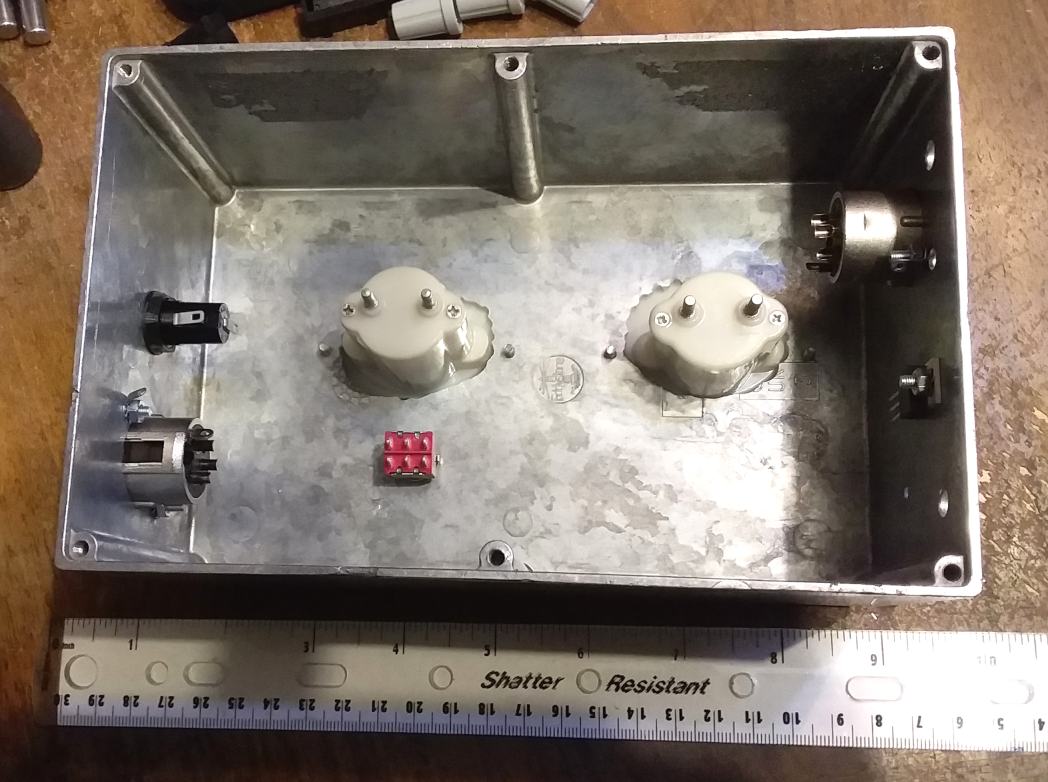
I hate metalwork, but it has to be done.
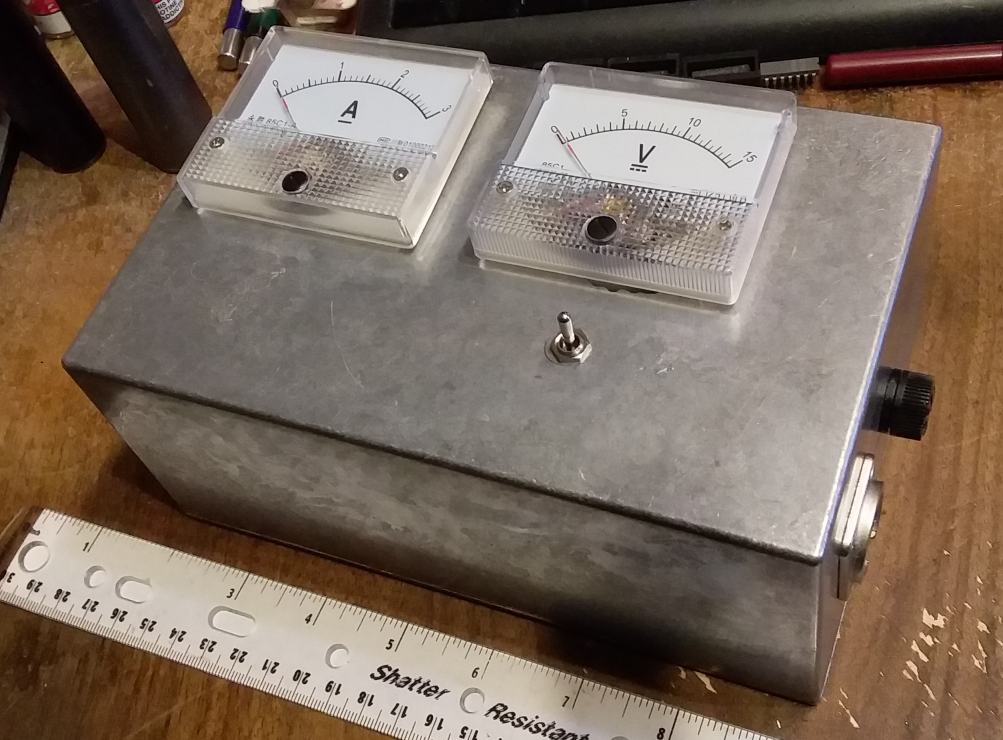
Solar Series Regulator Top Angle View
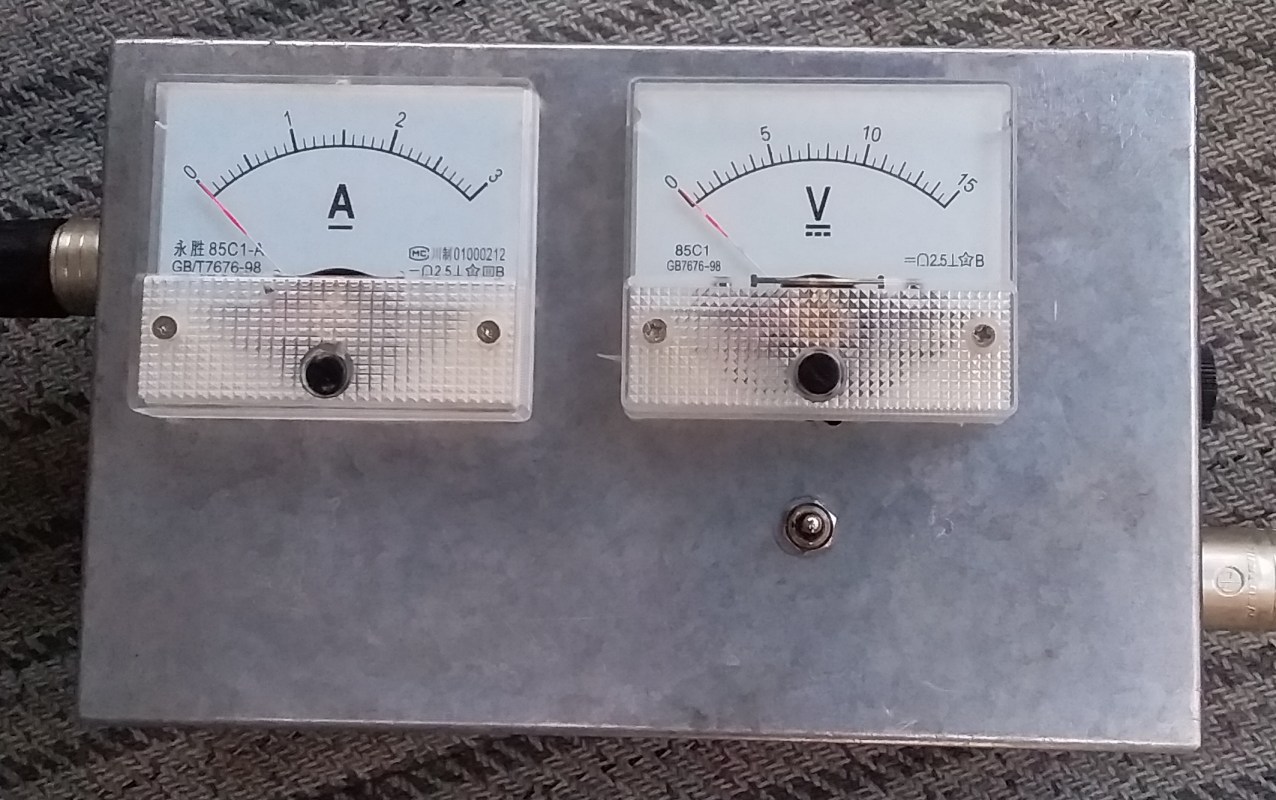
Solar Series Regulator Top View
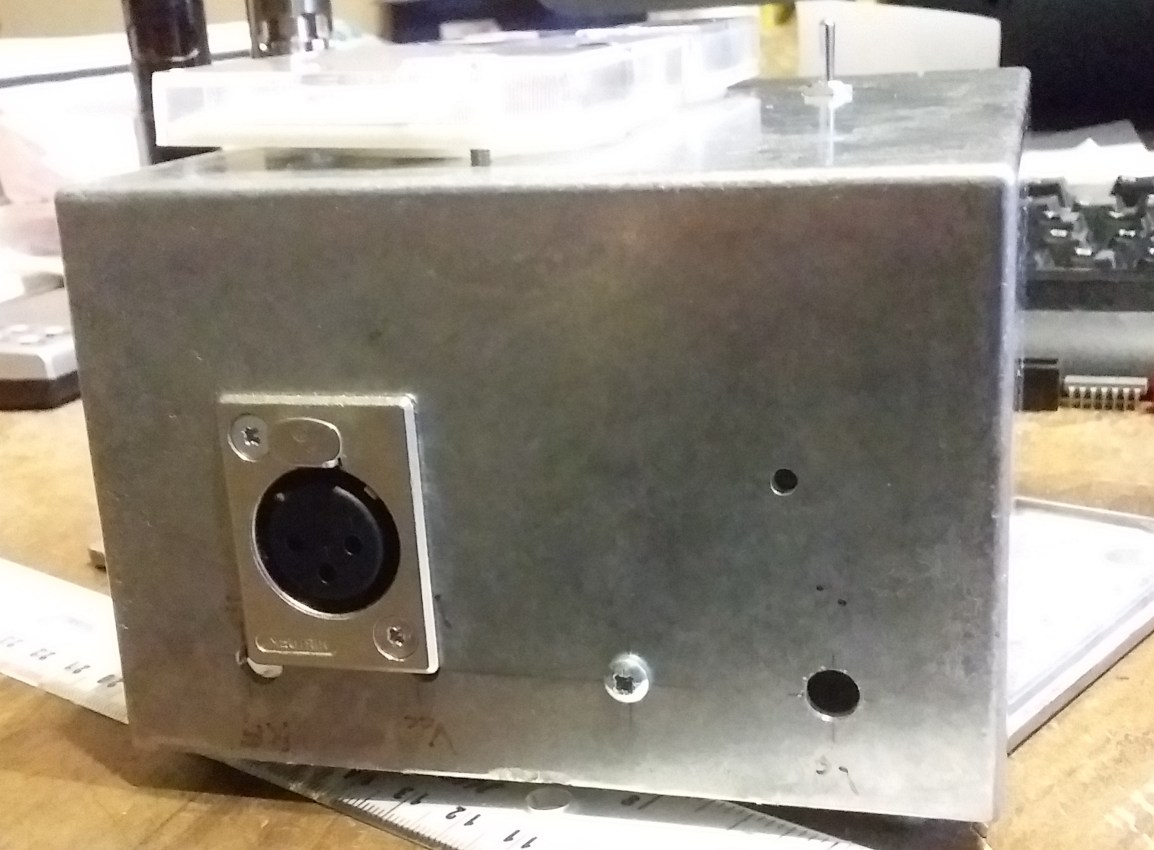
12V Solar Panel Input Socket On Female XLR
Solar Battery Regulator Output Male XLR And Fuseholder
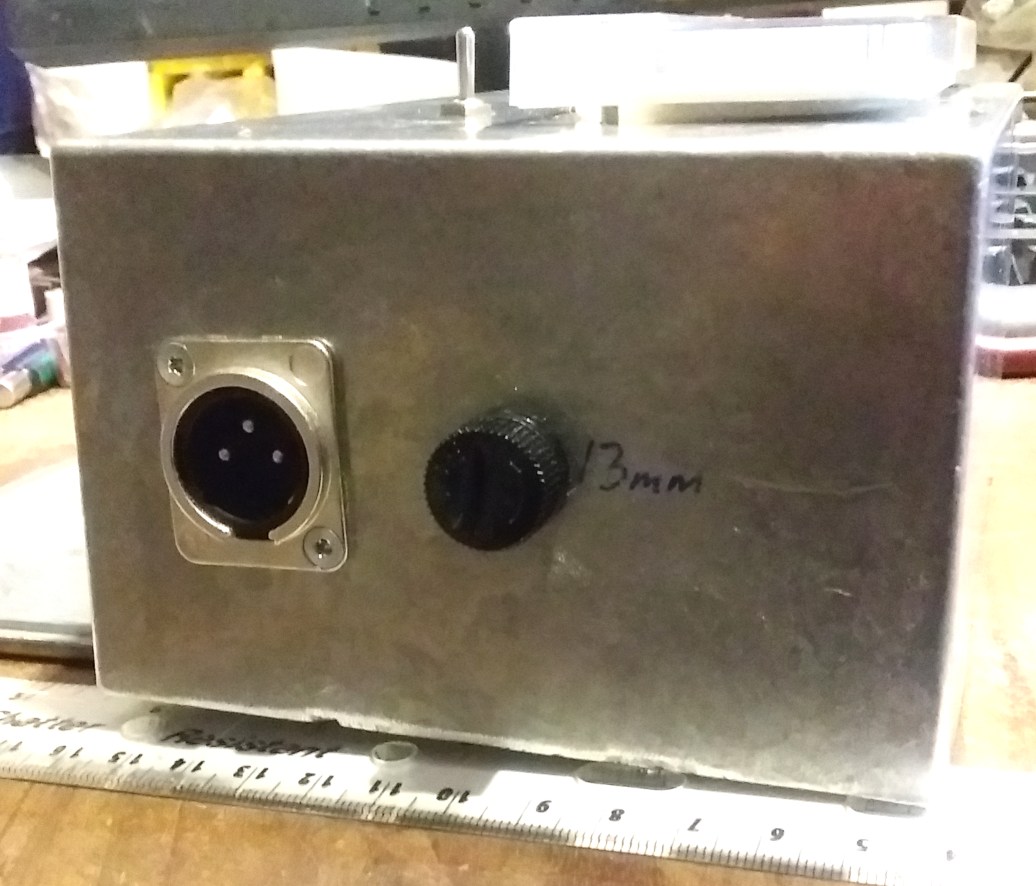
Three pin XLR audio connectors are not specifically intended for
DC power use, but they can't be connected the wrong way round and
have plenty of current handling capability. They are good quality
items if you avoid the fakes. You see them used for the charging
input on some mobility scooters.
Solar Series Charger Inside Wiring
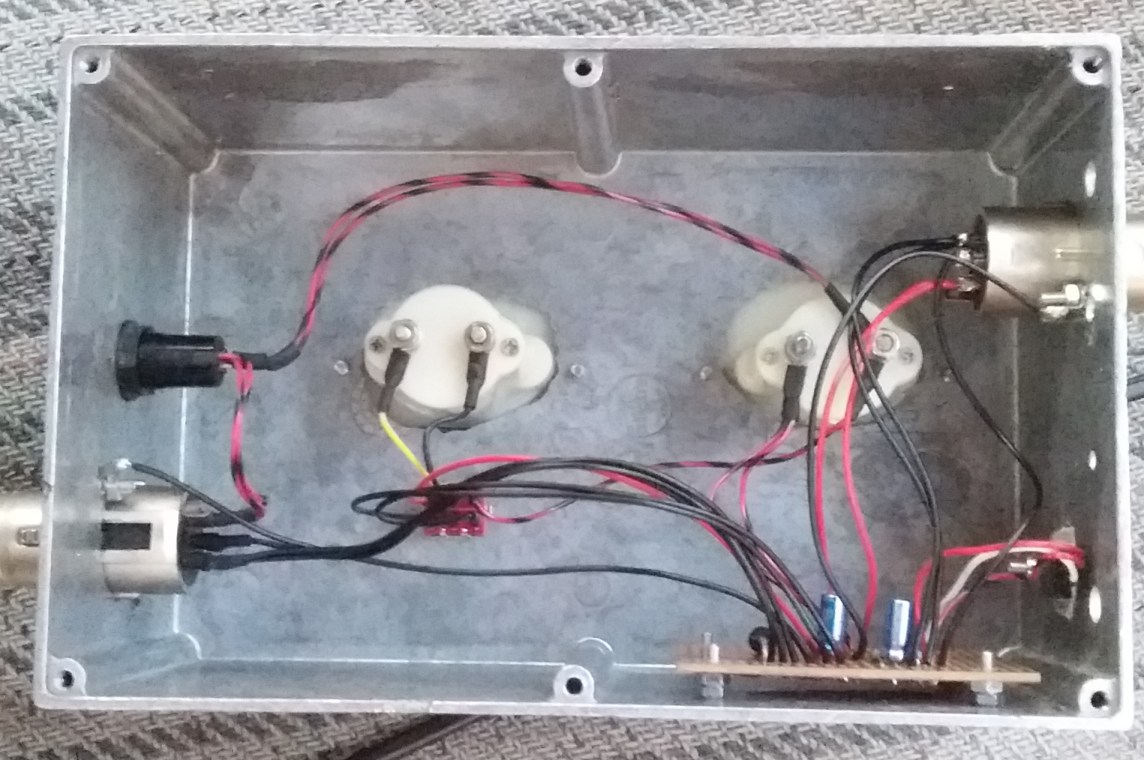
Note the use of direct soldered connections to the circuit board
and doubling up of some of the higher current wiring.
Solar Series Charger Circuit Board
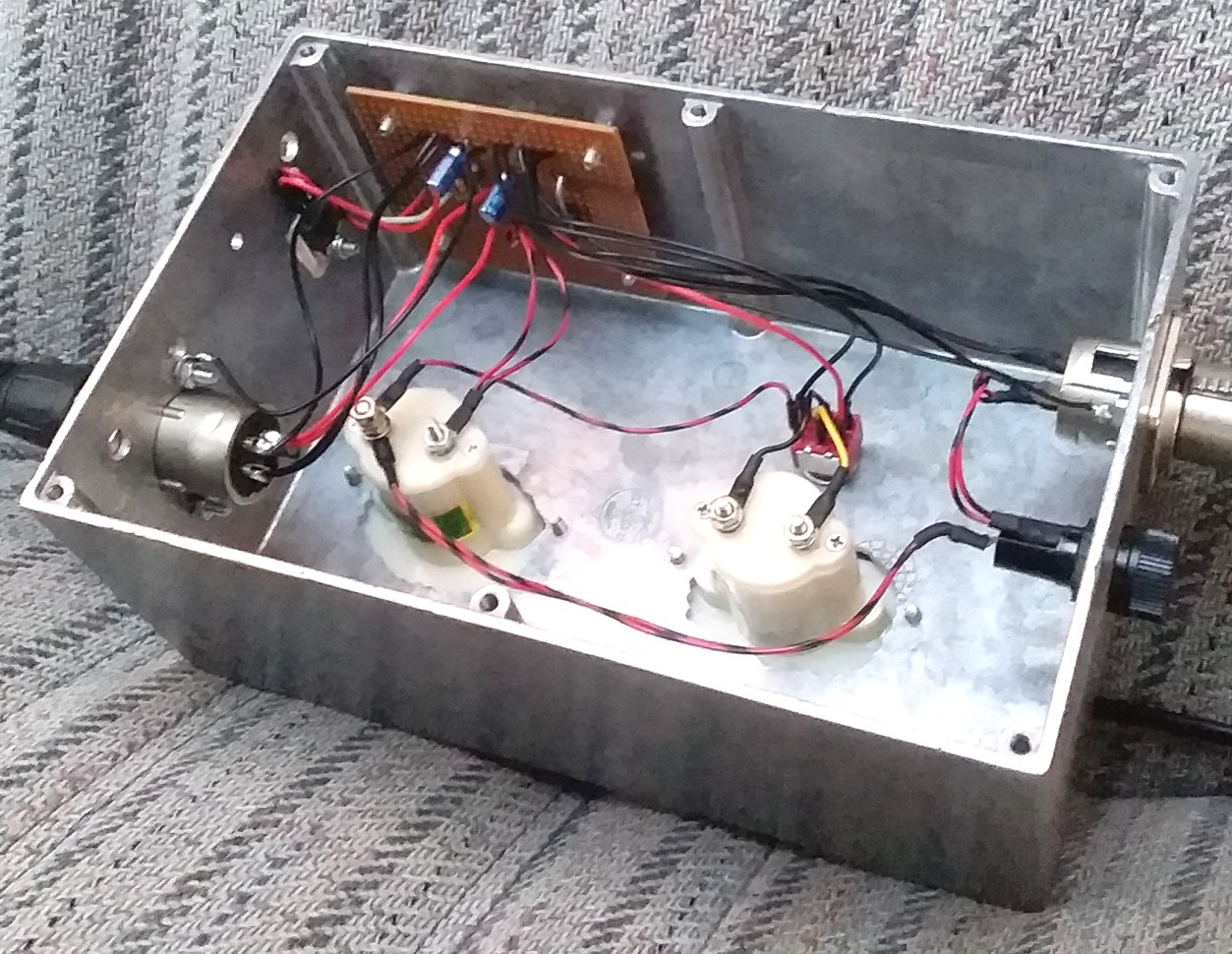
Solar Series Regulator In Use Showing Battery Voltage
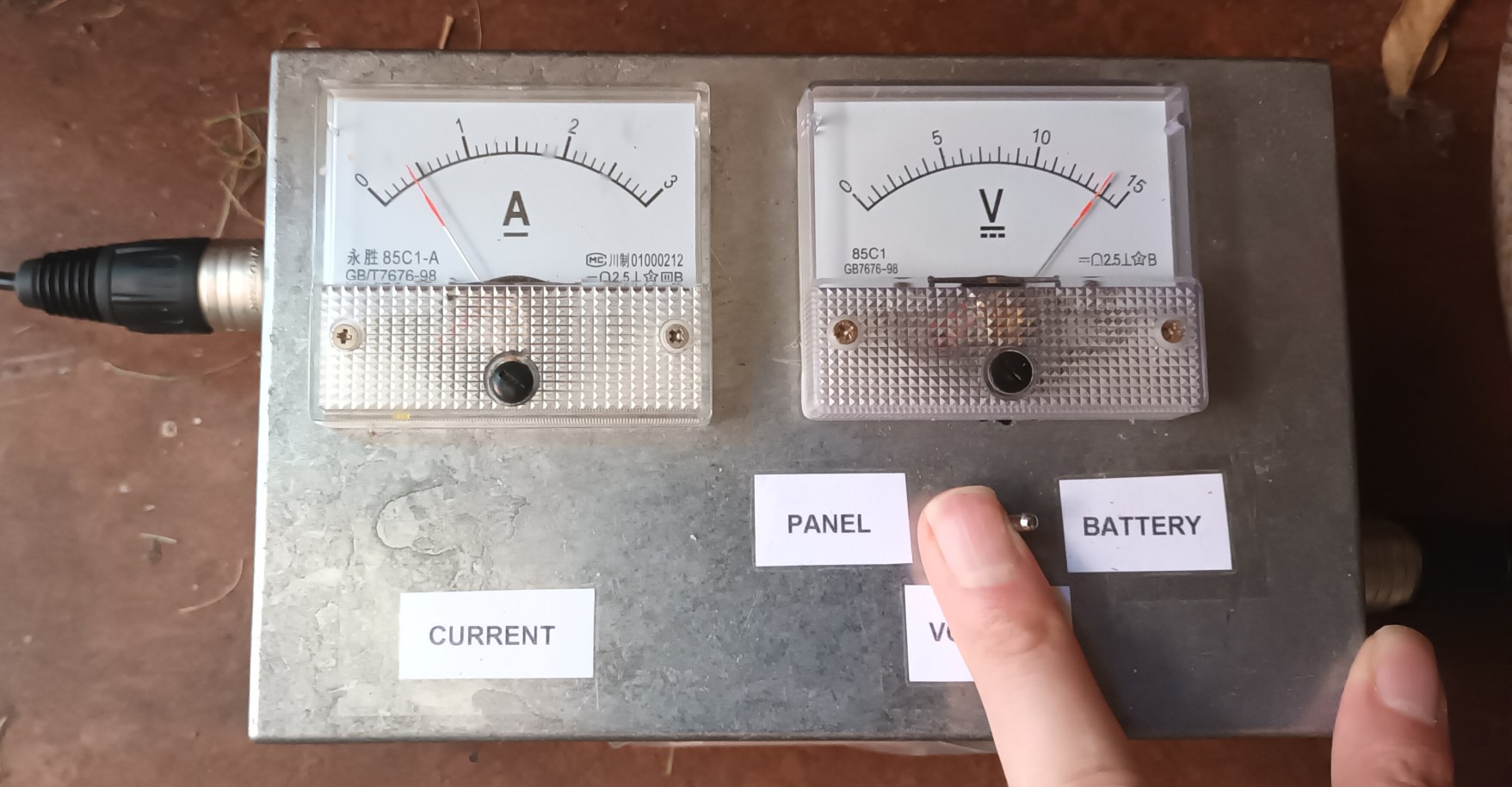
That's 0.4 Amps at about 13.2V. The voltmeter is somewhat
enthusiastic and reads a bit high.
Solar
Series Regulator In Use Showing Panel Voltage
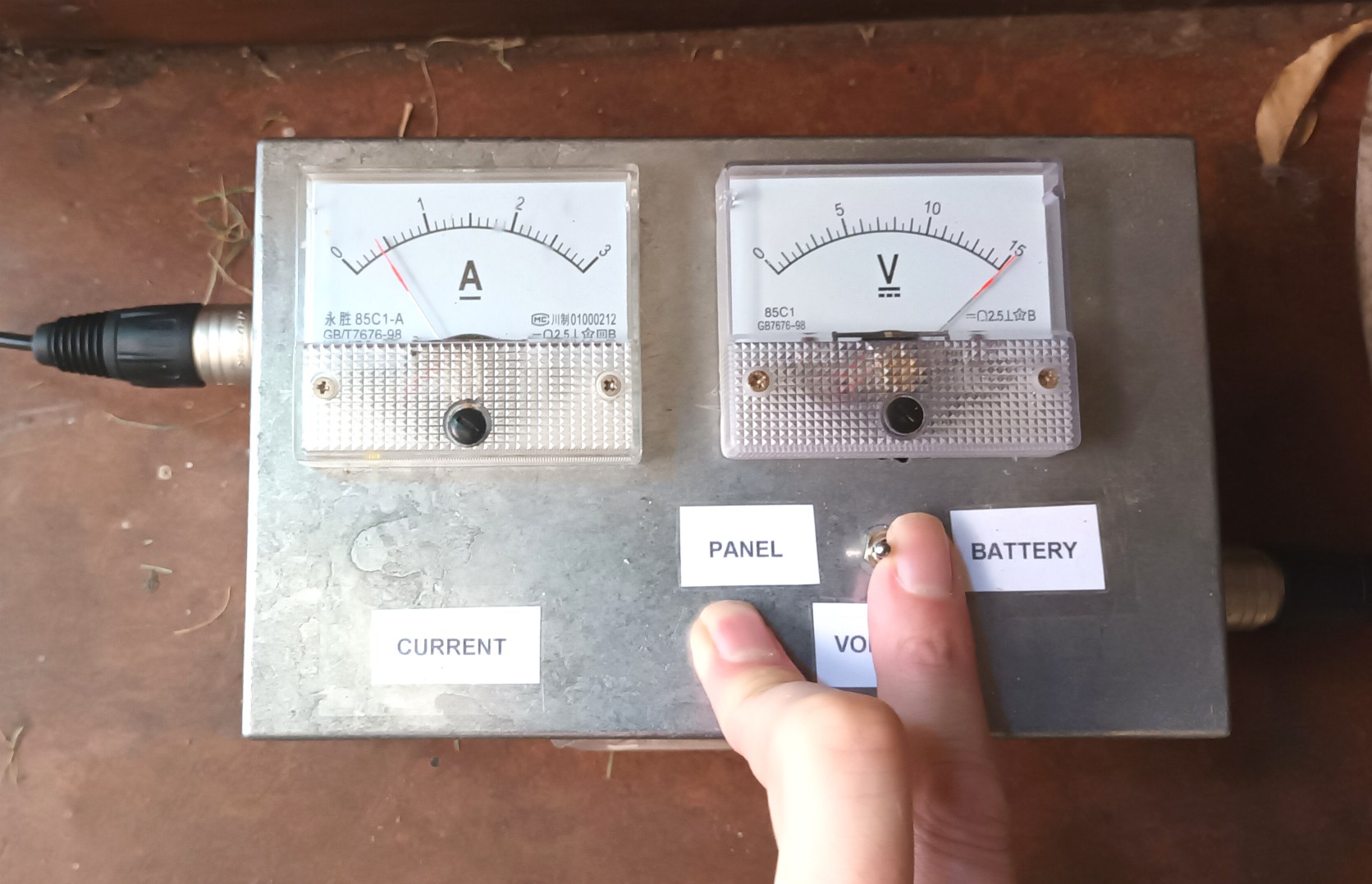
That's a 2 Volt drop through the system. At 0.4 Amps we're
wasting about 0.8 Watts as heat in the regulator and diode. This
waste is what shunt regulators try to avoid by connecting the
panel directly to the battery. We'd rather have the additional
inherent safety of a series regulator in this particular case.
Solar Series Regulator In Use Overview
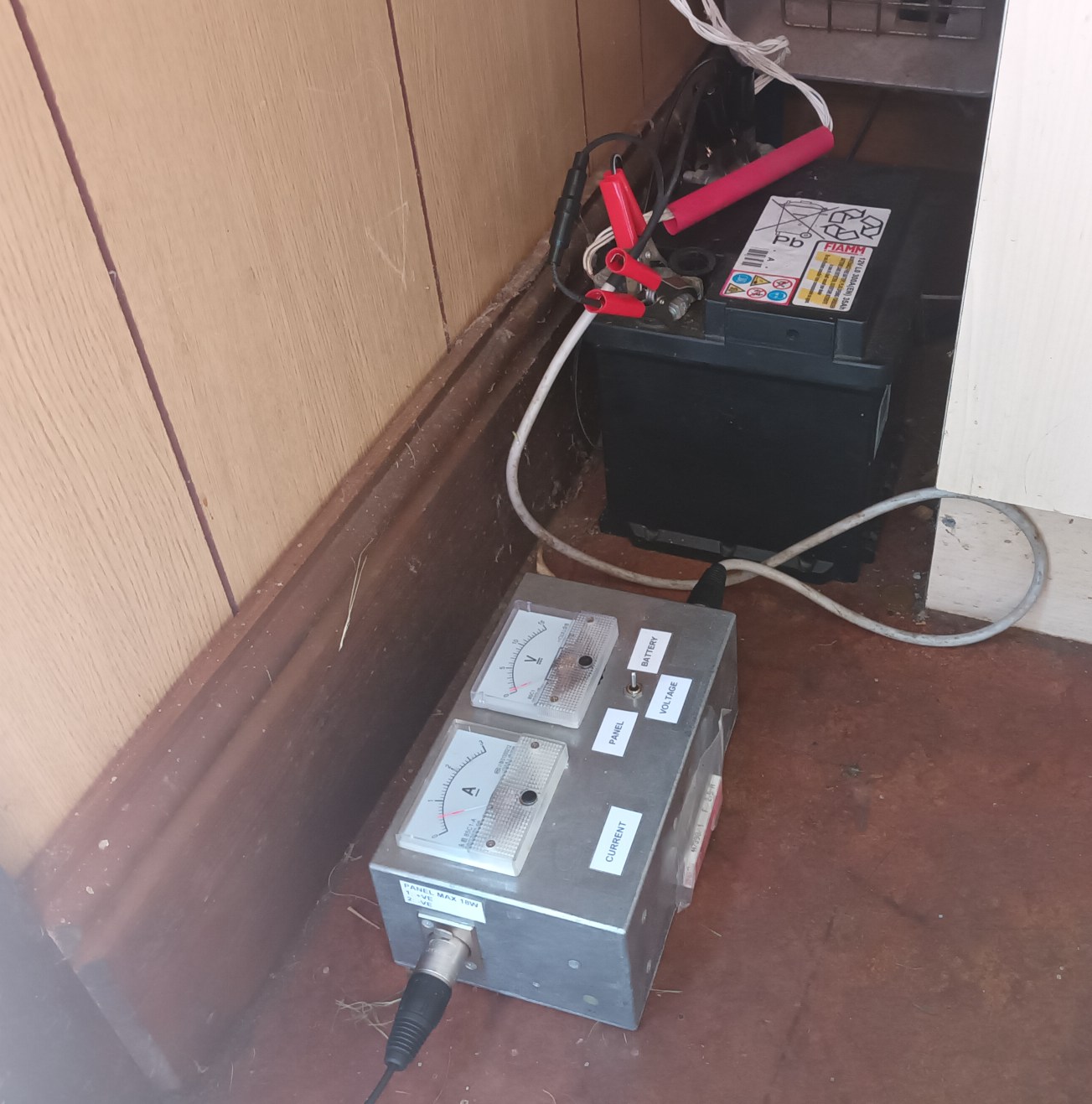
That's a packet of spare 20mm 2 Amp fuses sellotaped to the
outside of the box which should be completely unnecessary. The
tubular fusholder shown has been replaced with a spade type.
12V Solar Powered Car Battery
Charge Regulator, The Simple Version
Close observers will note that in the
schematic diagram, there's a simpler version without any panel
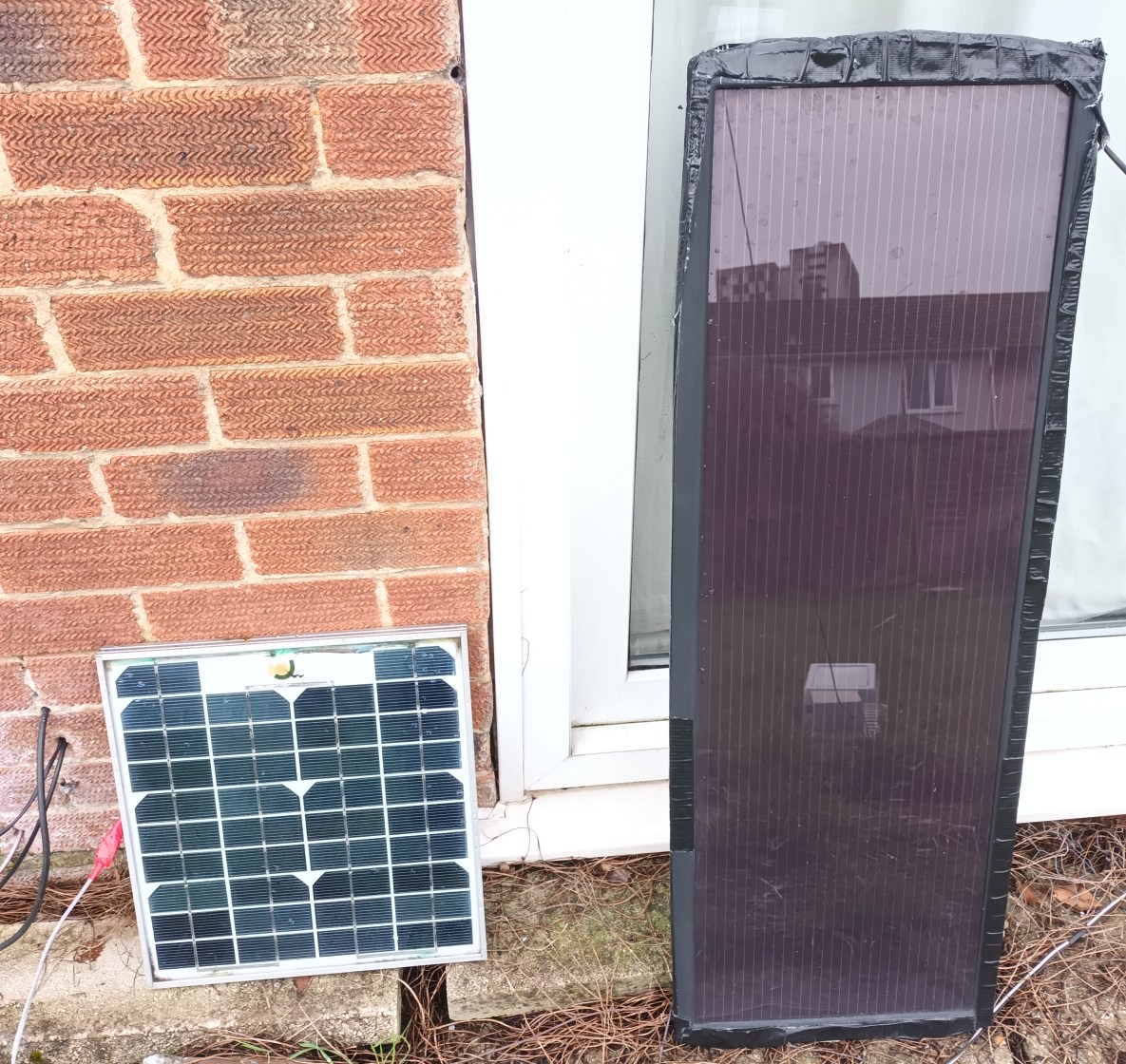
meters. Here it is. I use the same type of 12 Watt panel connected
to my car battery via the simple regulator. The panel is the one
on the right in this picture. It has been much repaired over the
years. The urban foxes love to chew through the cable which leads
round to the front of the house.
Solar Panel Used For Car Battery Maintenance At Home
Simple Version Of Solar Series Regulator In Use
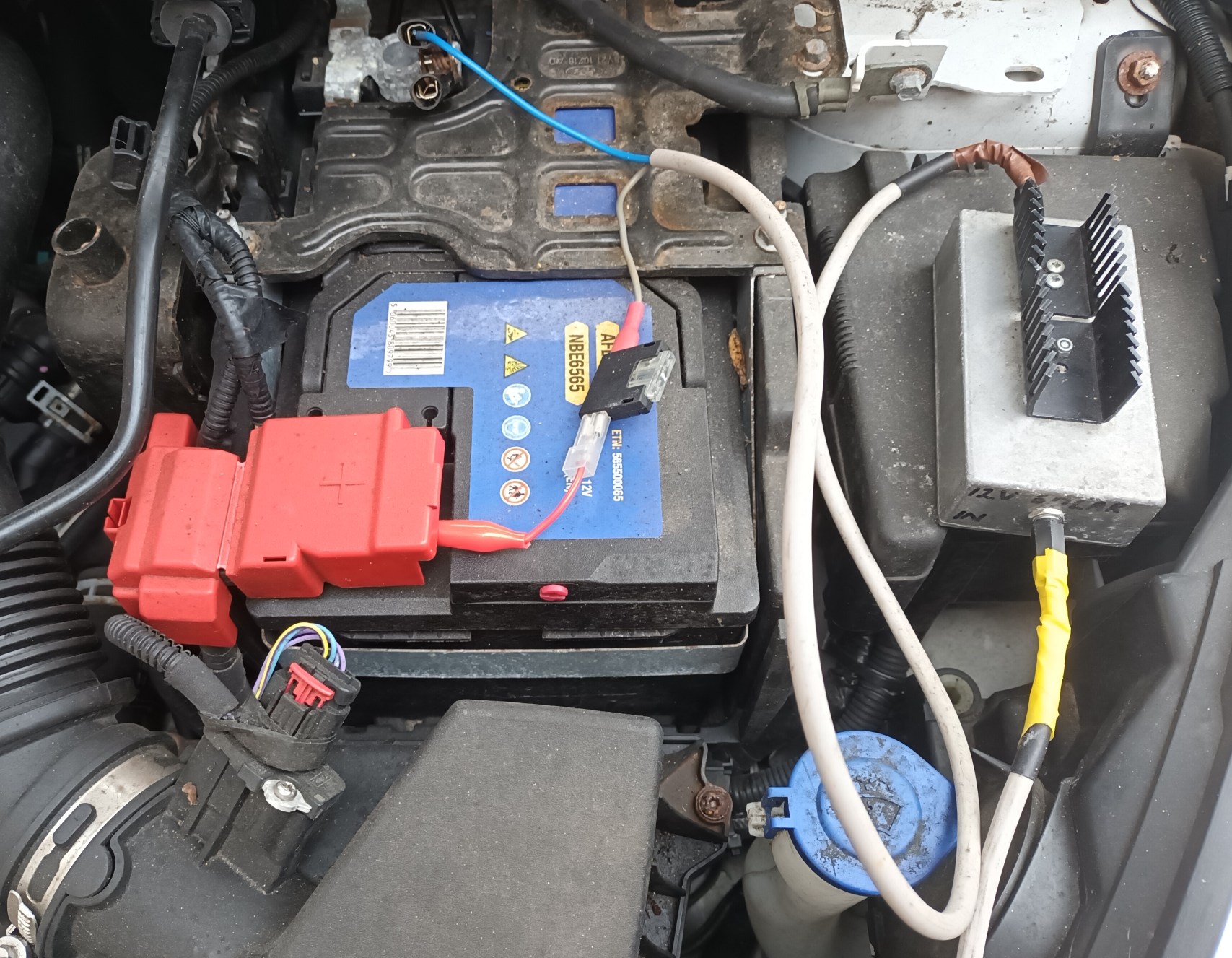
Here's the simple version in use, showing that important short
connection to the battery terminal before the safety fuse. It's
difficult to see how you could short that out. The use of circular
charger connectors here is a compromise. They are not as good
connectors as the XLRs, but the panel input plug will pull out
quite easily if you accidentally reverse the car off the drive
without disconnecting the charger box first. Yes, I have tested
this.
Simple Solar Series Regulator Panel Input Socket
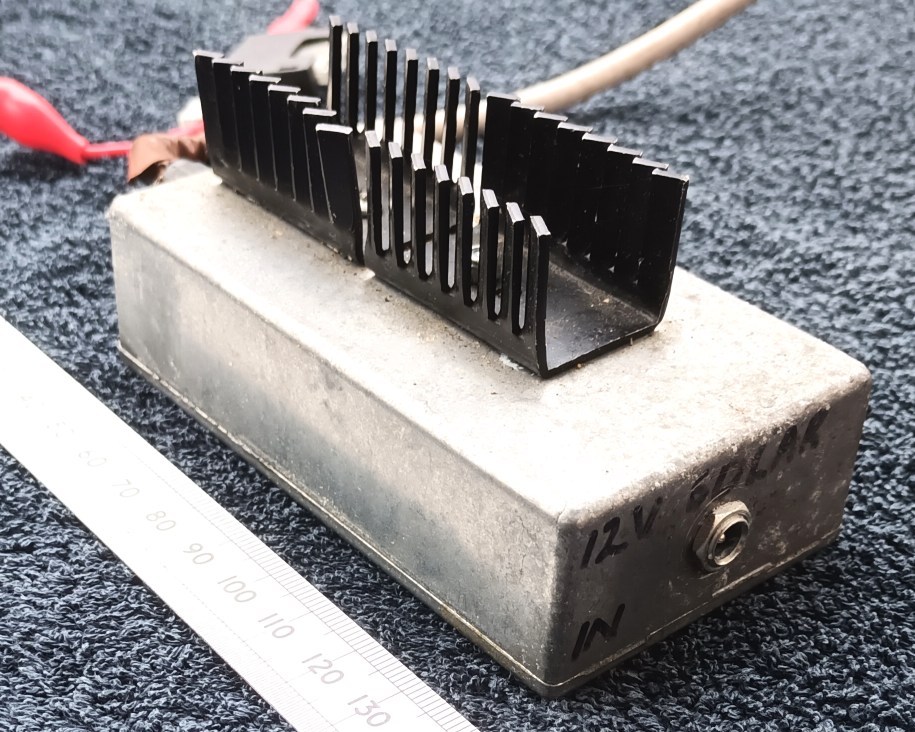
Simple Solar Series Regulator Battery Output Socket
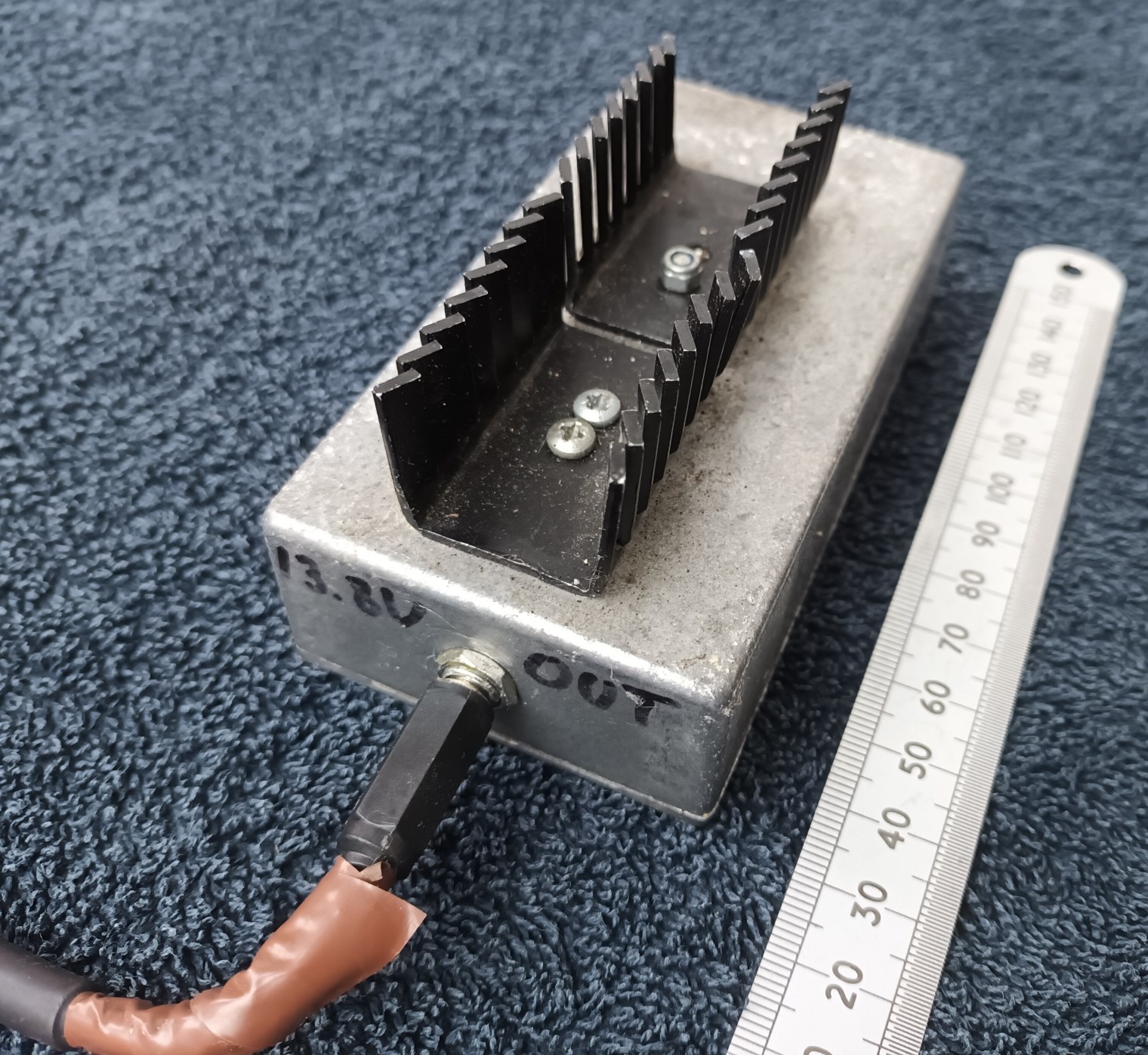
The two heatsinks on the top have proved to be unnecessary. The
diecast box alone can easily dissipate the low number of Watts
that could be encountered under worst case conditions.
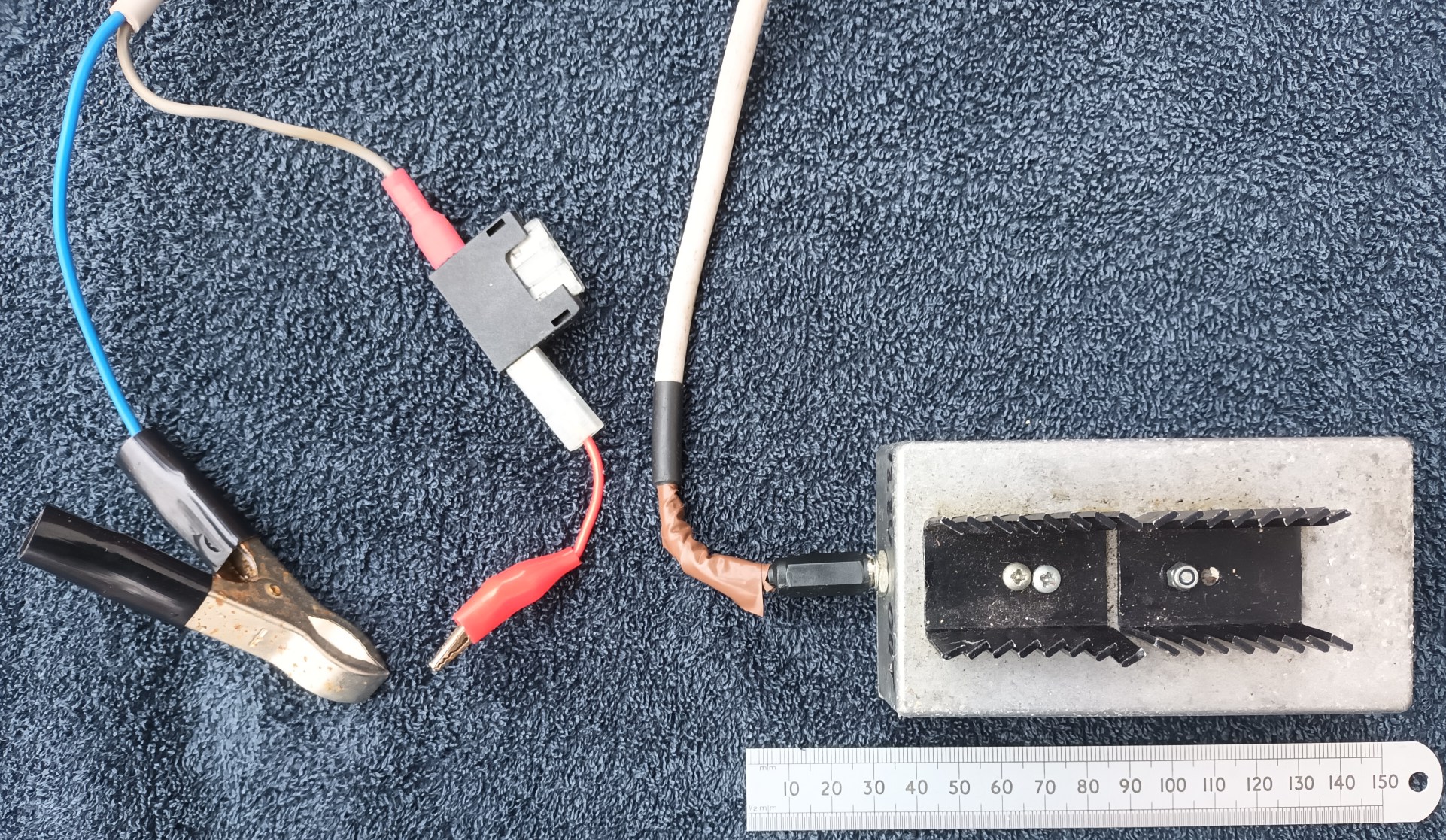
Simple Solar Series Regulator And Battery Connection Lead
Simple Solar Series Regulator Insides
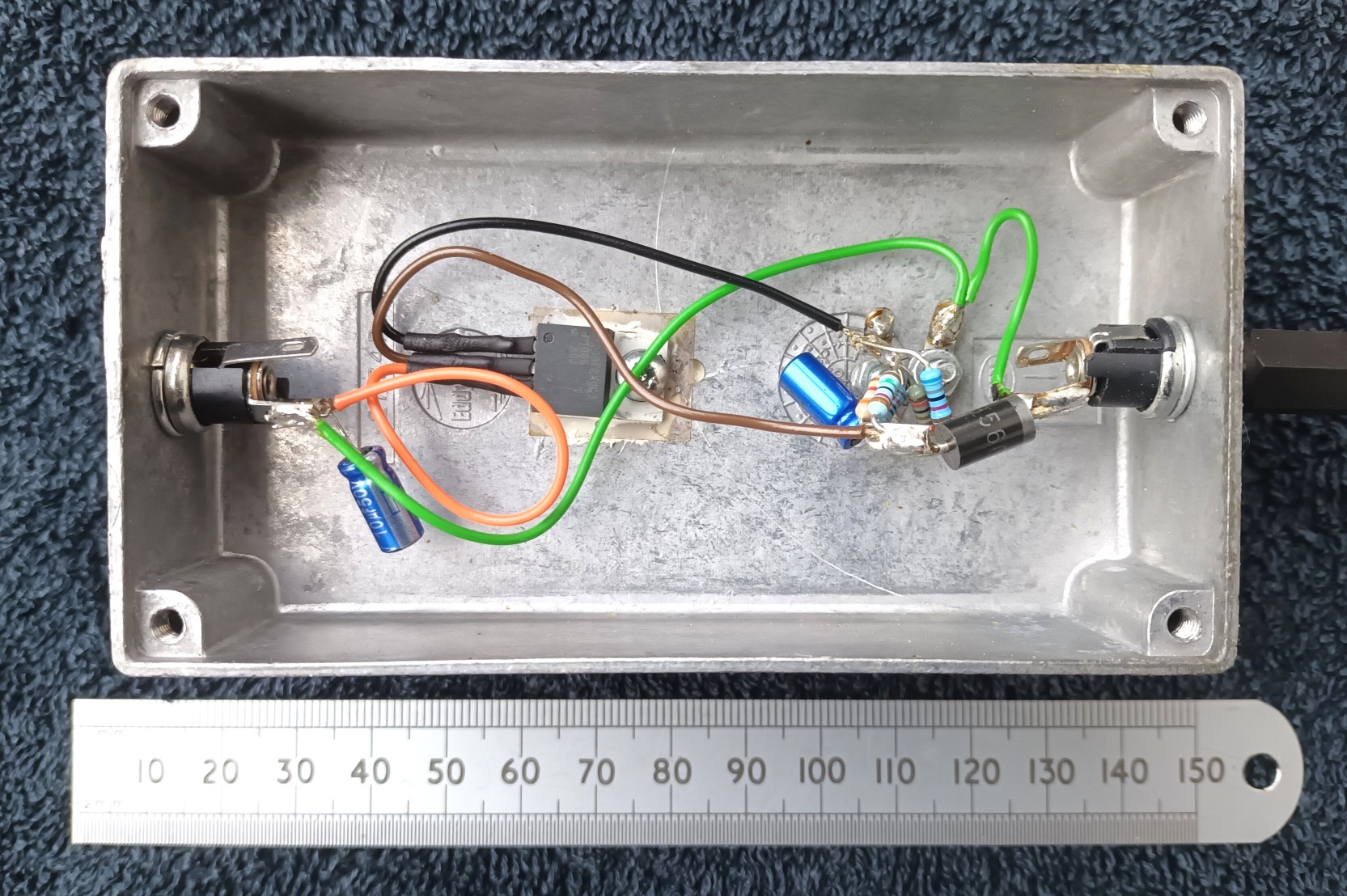
Here you can see that all the components are self supported on the
input output sockets and a grounded solder tag.
The Series Lead Acid Battery Solar
Charge Controller From A 2026 Perspective
The 12 Watt amorphous solar panel has
been repaired several times. This involves the careful scraping of
tiny side connections between the glass layers, re-soldering, lots
of expoxy resin, and black gaffa tape. My last check on a sunny
winter day showed a battery voltage of 13.63V at a charge current
of 40mA after four weeks stationary on the drive. It's been
connected for a couple of years.
How Do You Do The Temperature Compensation?
You put an inexpensive thermistor, that being a non linear
temperature dependant resistor of an appropriate initial value in
the voltage setting chain, possibly with a fixed resistance in
series or parallel. Then you set everthing up for the right output
voltage at 25 C as already described. You don't need to use a
fancy linear tempco resistor because the compensation required is
only a small fraction of the output voltage. It would give you a
bit more final voltage in winter and a bit less in summer. That is
what the battery wants because of that lead acid temperature
coefficient. In this design it would be OK to put it in the actual
charger box away from the heat generated by the regulator and put
the charger box next to the battery. This is because by the time
you're getting up to 13.8V, there is little current flowing and
little heat being dissipated in the regulator to mess with the
thermistor temperature.
Design Tweaks
It is interesting to consider just how much loss you'd get
overnight by removing the output Schottky diode. That would give
you more certain voltage regulation. The answer with the values
shown is 10mA. That's too much for my liking. You could choose to
use higher value resistors though, and get this down to 1mA or
less. You'd need to make sure that an amorphous panel had a diode
in the output, or else the battery could discharge through the
regulator and into the panel.
I have no doubt that there are much more modern high efficiency
options using proper DC-DC switched mode regulators available.
Feel free to use one of those, even one bought from China on
Aliexpress. Don't blame me when the old joke about "Coming home to
a real fire" turns into reality.
And Finally...
Talk of fuses in 12V battery systems
reminds me of some CB radio japes in the past. As a teenager I
would regularly be presented with the CB radios of local users
where they had been connected up to the 12V DC power the wrong way
round. What happens when you do that? The first time, if you're
lucky, the 2 Amp fuse in the power leads blows, you replace it,
and away you go. These were not the kinds of sets that I
encountered. I always saw them when that external fuse had been
removed, or replaced with a piece of foil from the inside of a
pack of 20 B&H Gold. Inside the radio, the 1 Amp reverse
polarity protection diode would be vaporised. The TDA7205 audio
amplifier chip would have a piece of plastic blown off the front
of the chip. The electrolytic capacitor across the main rail would
have exploded, sending bits of fluff and foul smelling smoke all
over the insides. The RF PA transistor would often be dead. The
LED channel display was occasionally broken which could usually
not be replaced. The 8 Volt regulator for the transceiver
sensitive bits would often have gone to silicon heaven as well.
Fused PCB tracks were what often avoided complete destruction.
I'd replace all these parts, but with a hefty 5 Amp reverse
protection diode and an internal 2 Amp fuse secreted in some
insulating tape. I'd make very little money on this, and you'd
never quite know how big the parts bill was going to be. The radio
thus fixed, I would hand it back to the user with a stern warning
to connect it up the right way round. Would I replace the missing
external in-line fuse? No. The radio is fixed.
A week later, or maybe the next day, the set would arrive back
dead.
"What did you do?" I would ask.
"I connected it up the wrong way round again." Would be the
inevitable answer.
"Oh dear. Same price as last time then?"
"Yup."
Replace the internal 2 Amp fuse, wait a week, hand back the fixed
radio, and that's where a bit more cash was made. That's not
dishonest. That covers the costs of the harder initial repairs
where the customer is going to balk at the price of the parts.
I was once riding with a CB radio chum in his bronze 1976 Hillman
Avenger with the usual black peeling vinyl roof. "Duracell," for
that was his CB radio handle, had fixed up his CB radio in the
car. I asked him which circuit he'd connected it into at the
fusebox. "Oh, I drilled a wire though the bulkhead and connected
it straight to the battery. I advised him that this was a
sub-optimal thing to do, suggesting that it was only a matter of
time before the PVC insulation wore through on the metal edges of
the bulkhead hole and set his car on fire.
"Oh, it'll be reet," He said.
Ten days later it was a smoking wreck outside his house.
Henry's general email address:
Navigate
Up
Recent Edit
History
19-FEB-2026: page created