The Radio Glen Transmit Selector
If you're enjoying these pages and you
have an interest in hobby type electronics or repair jobs, you
might like to visit my other website www.usefulcomponents.com,
where there are details of some components for sale and some good
electronics kits.
Technical Manual For The Radio Glen
Transmit Selector

Web Release Note
This device has been in use for a few
years now. I'm not aware of any problems with it though I think it
is sometimes used to direct feeds from OBs direct to the
transmitter without going through a desk which I wouldn't
recommend. Very high RF currents caused by being right next to the
50 Watt transmitter once caused some random switching of the
relays due to some grounding and mismatch problem in the technical
cupboard. Latching relays really do sound like an unnecessary bit
of retro don't they? But they are so well behaved and bomb-proof,
which is what you want for a device in the transmission chain. I
was surprised how well this turned out, though I did my back in
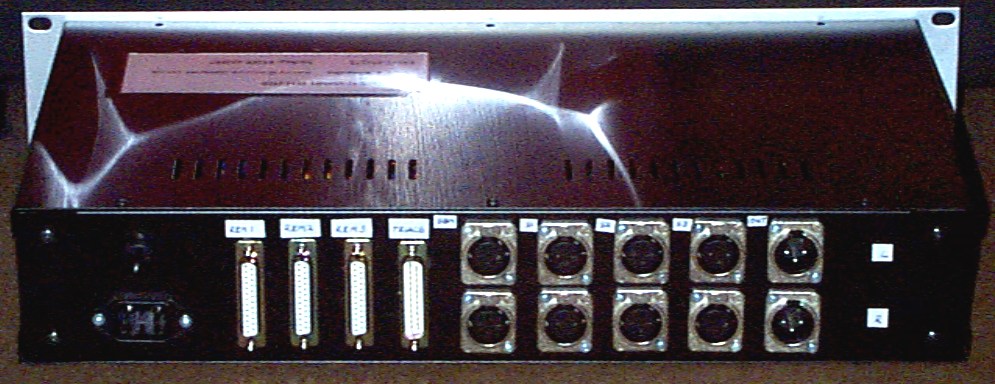
doing the metalwork for all the sockets on the rear panel. The
hysteretic behaviour of the latching relays is especially handy -
that is if one of the coils is energised and the other coil is
subsequently energised then the relay stays in the original
position. This effectively deals with all situations of switch
de-bouncing and all the buttons being pushed at once - and I tried
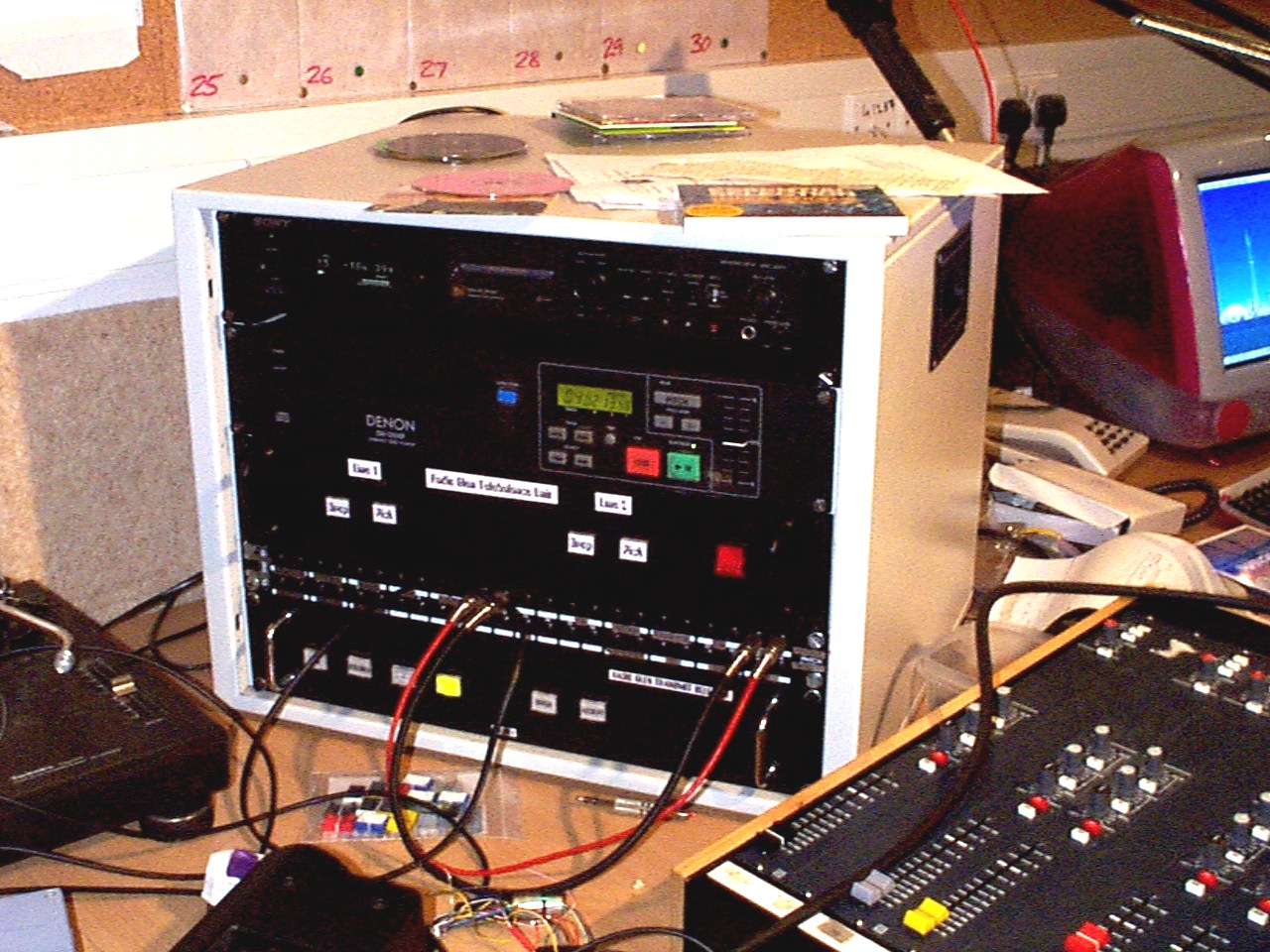
that often enough. The picture above shows the main unit with the
remote control sitting on top of it. The remote unit is now
computer controlled by the automated system at SURGE. There are
even LEDs above the control switches which flash when you are
about to be put on-air by the system.
Radio Glen Transmit Selector
History
Around October 1998 the station and
studio were in a fair state and looking forward to spring of the
following year when the big change to 1W ERP free-radiating might
be made. However, the desk was still wired such that the main
output was always connected to the transmission and distribution
system. It was not possible to take the studio off-air to do
production or shut down for maintenance. A transmit source
selector was what was needed, the same function which used to be
provided by the selector buttons and relay box underneath the big
output meter in the F-block studio. It would have been possible to
make a cheap selector with a rotary switch and an old box, but I
thought that it would be more interesting to make a full-scale
remote controlled switch unit. I considered 22V10 style
programmable logic for the state machine but was quite taken with
the idea of using latching relays. A bit of design work showed
that this was possible with 9 latching relays. While the latching
relays are quite costly, it made the whole design terribly simple,
avoided programming PLDs with their associated long term
maintenance problem, and was inherently non-volatile.
General Description
The main box of the Transmit Selector
system is designed to be located in the technical rack of a small
radio broadcast station. There are four stereo balanced line
inputs, either of which can be routed to a stereo balanced output.
The signal routing is performed with relays and so the switching
may not be completely silent. The source is selected by one of
four buttons on the main box or by an identical pattern of buttons
on one of three remote control panels. The particular panel which
can control the switcher at any time is the panel which has the
'ACCEPT' lamp lit. This works on the standard offer-accept system
as widely used on mixing desks and switchers. The main switch unit
also has an 'OVERRIDE' button which can be used to force the
system into offer mode regardless of whether the main panel has
control. The main panel can therefore steal control when needed,
and this also serves to reset the system on delivery or when the
latching relays have been set to an unknown state by vibration in
transit. Also, if a remote panel has control and is subsequently
disconnected, the system can still be switched from the main panel
using override.
Remote panels connect to the main unit via a sixteen way cable
terminated with 25-way D-connectors. All power for remote lamps is
provided along this cable. Both main units and remote panels are
2U size, though this is only due to handy small boxes for the
remotes only being available in 2U size. Future units could be 1U
if suitable hardware can be found. The main unit will have to
remain 2U due to the number of connectors on the rear panel. All
switch lamps are LED types.
As noted the latching relays are non-volatile; They remain in
their last position when power is disconnected. The signal
switching relays are ordinary non-latching types however. The
system is designed such that the switcher will revert to the
sustain programme input on channel one when power fails. When
power is restored, the originally selected studio will be put back
to the transmitter.
Schematic Descriptions
Signal
Switching Relays switch01-01.sch PDF
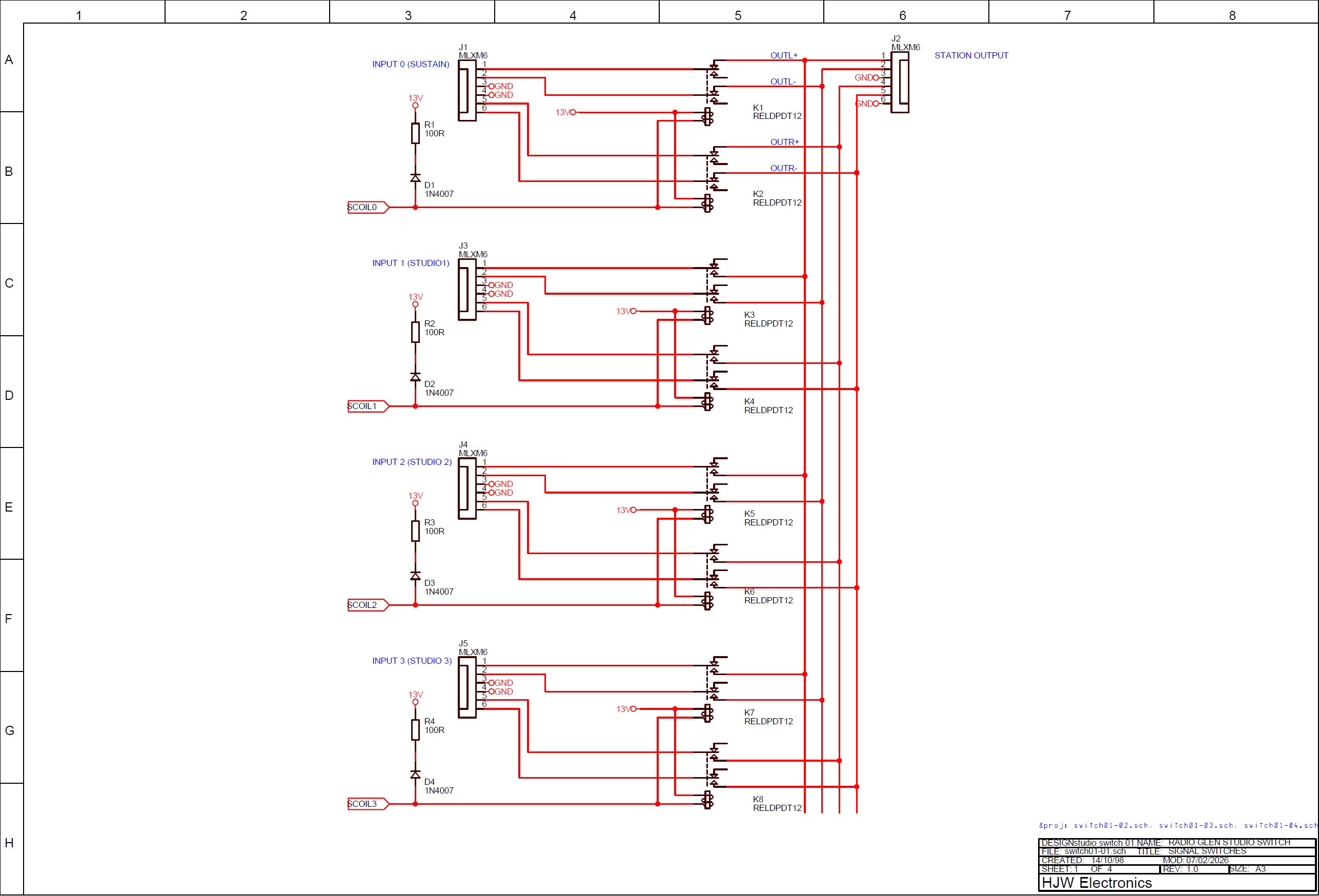
This sheet shows the signal switching relays. They are driven from
the latching selector relays. Note the sustain service relay has
the signal wired via the normally closed contact such that sustain
service is selected during a power failure. The reverse biased
diodes and resistors across the coils are a step towards spark and
EMC suppression.
Latching
State Relays switch01-02.sch PDF
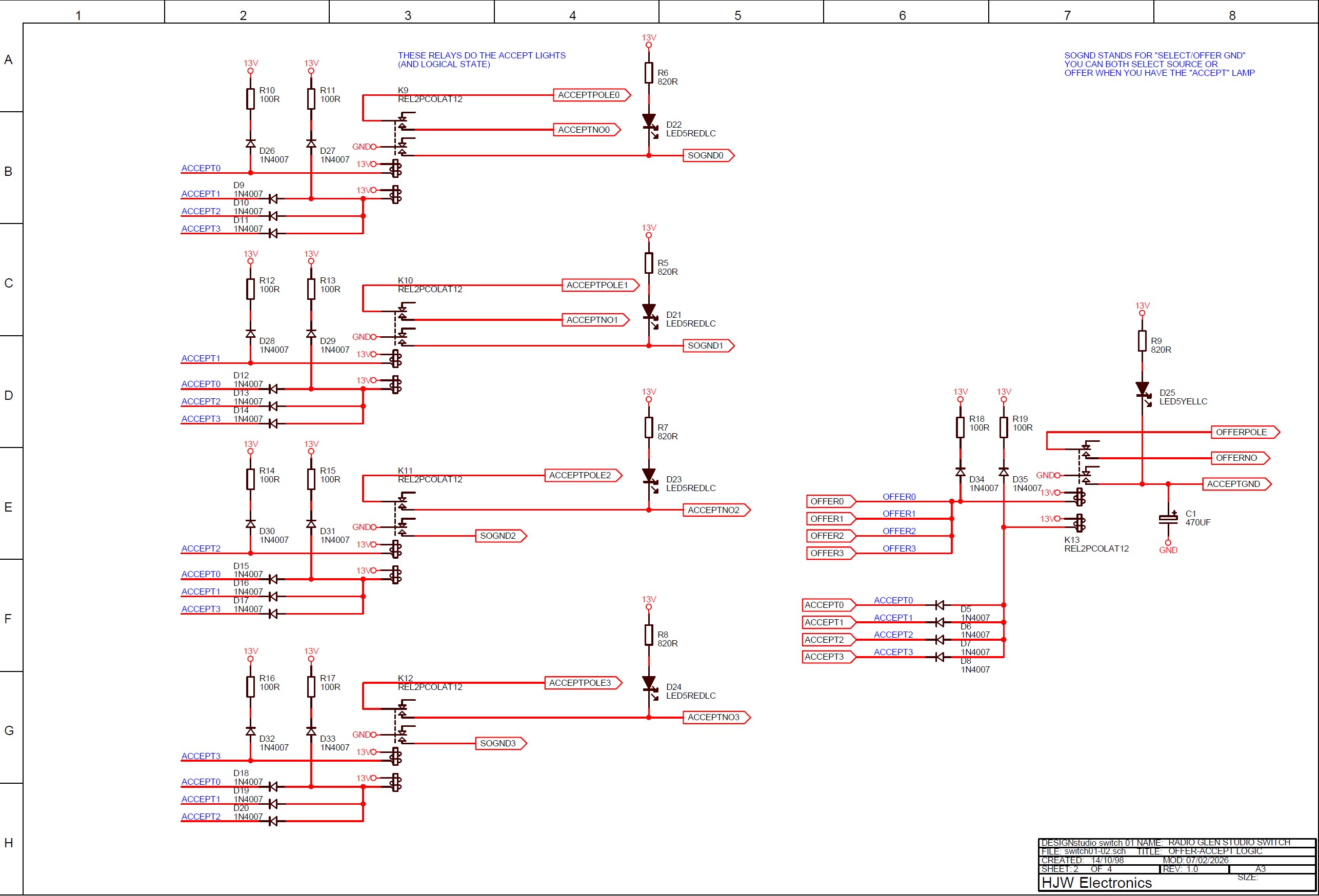
Sheet two has the four state relays which record which panel has
control, ie the accept lamp lit. The common ground of each remote
panel's select switches are routed through the appropriate relay,
so only one remote has control. The fifth relay on the sheet
indicates the offer state and allows any remote panel to alter the
state of the accept relays. Note that when one panel selects its
own accept relay to go on, it switches all the others off via the
diode ORing arrangement, ensuring that only one panel can ever
accept control. SOGNDx is a potentially confusion label; It stands
for SELECT/OFFER GND and is low for the panel which has the accept
lamp. In this state that panel can both do selecting and offering.
Latching
Source Relays Rollover switch01-03.sch PDF
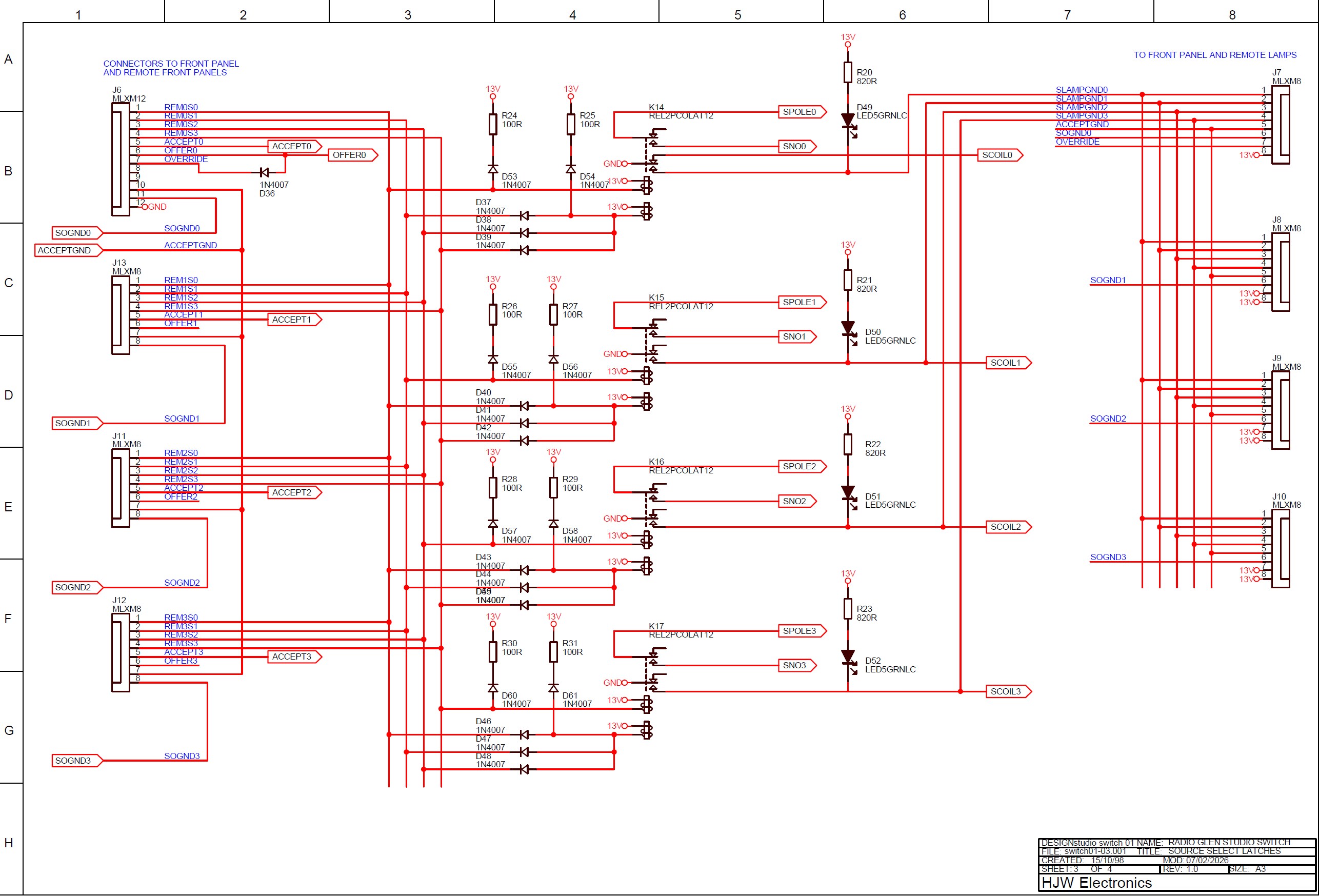
The state of the four latching relays here determine which source
is selected to the output. Only one of the panels has the bottom
end of its switches grounded by the appropriate SOGNDx, so only
one panel can change the state of the select relays. Note that
when one relay is selected to go on, all the others are switched
off via the diode ORing arrangement. In this way only one source
can ever be selected. If the user happens to try pushing two
buttons at a time, the button pressed first will remain lit, as
that switch has already activated the off coils for all the other
relays, and the relays will not change state with both coils
activated. This provides an extremely neat rollover action on the
panel switches and avoids double source selection.
Triac
Annunciator Outputs and PSU switch01-04.sch PDF
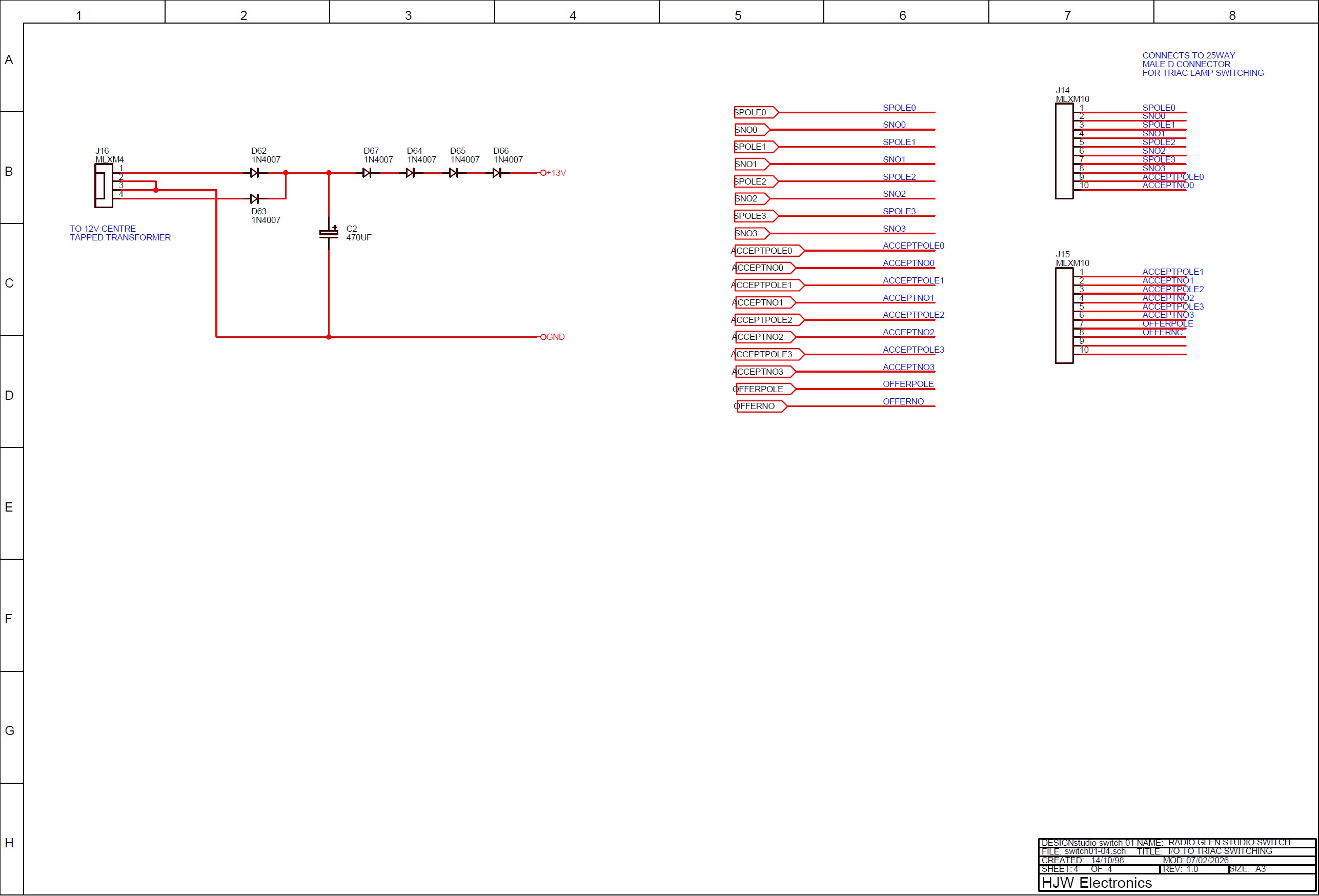
This is the PSU and the outputs to the triac system connector. The
PSU is self explanatory, other than the voltage dropping diodes.
In an ideal world you would select the correct voltage of
transformer to start off with, though the choice of a toroid is
always a sensible option with audio equipment. Each of the state
relays' second normally open contact pair are taken off to a
25-way D connector on the rear panel. This can be used to switch a
triac unit to light large mains annunciator lamps to indicate who
is on air, who has switch control, and when switch control is on
offer.
Transmit Selector Pictures
Rear Panels Of The Main And Remote
Unit

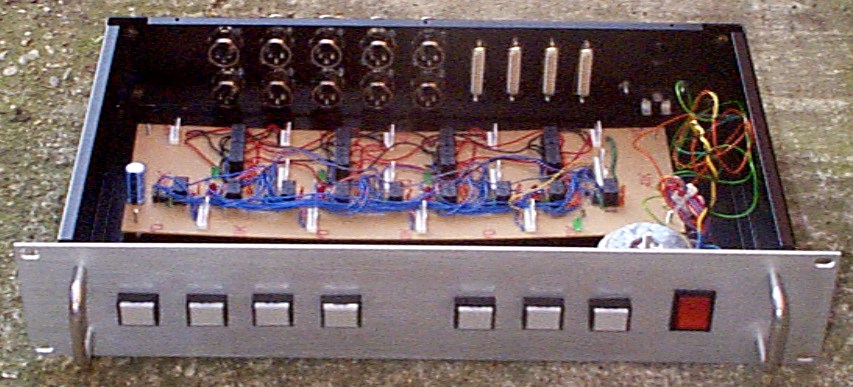
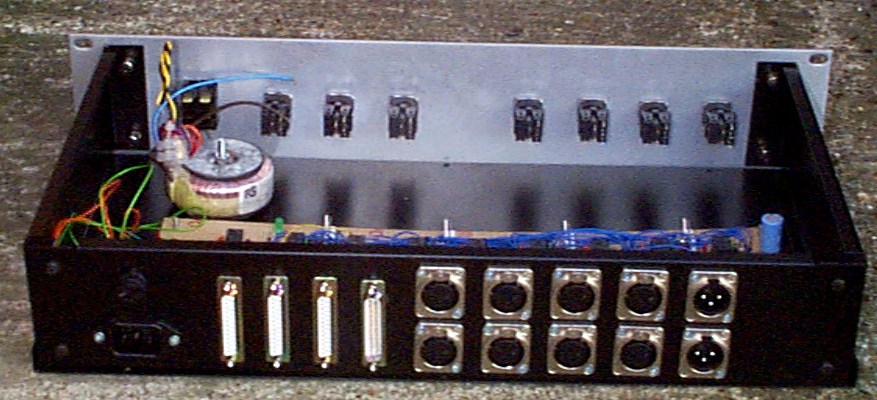
Inside The Main Unit Under Construction

Main Switcher Rear Panel
Insides From Front Under Construction
Insides From Rear under Construction
Making the holes for all those connectors was not fun. You can get
a screw-up punch and die for the unified type XLRs which makes the
job a lot easier.
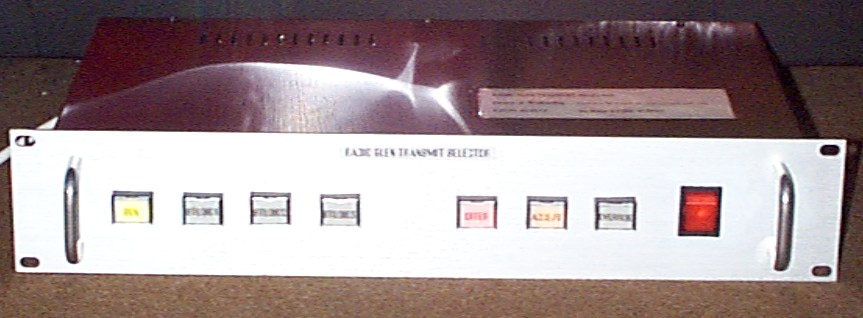
Front Panel
This has transparent labels printed on laser printer
transparencies in the illuminated push switches. I used Amelia
font to give a suitable retro appearance which matched the ancient
switcher that was once present in the F-block studio.
Studio 1 Remote In Radio Glen's New Terraces Studio In 1999
Here the switcher is shown in use below the two line TBU
telebalance unit described on another page.
Henry's email address:
Navigate
Up
Recent Edit History
18-JAN-1999: draft created
11-FEB-2002: tarted up for web release
07-FEB-2026: updated formatting and pictures, html incantations